Climate change, conflict, and resulting displacement demands further innovation in humanitarian shelter. To meet these evolving challenges, we continuously research, develop, and pilot with partners, to explore how our designs can become more durable, easier to maintain, more sustainable and better adapted to local contexts.
Five shelter frames up clad with various materials for ongoing tests. Photo: Better Shelter
Our new shelter portfolio builds on a lightweight, durable modular frame (like the current one), but is designed to better adapt to different materials, needs and budgets. Its flexible structure allows for varied sizes, layouts and uses, from homes to classrooms, clinics and community spaces.
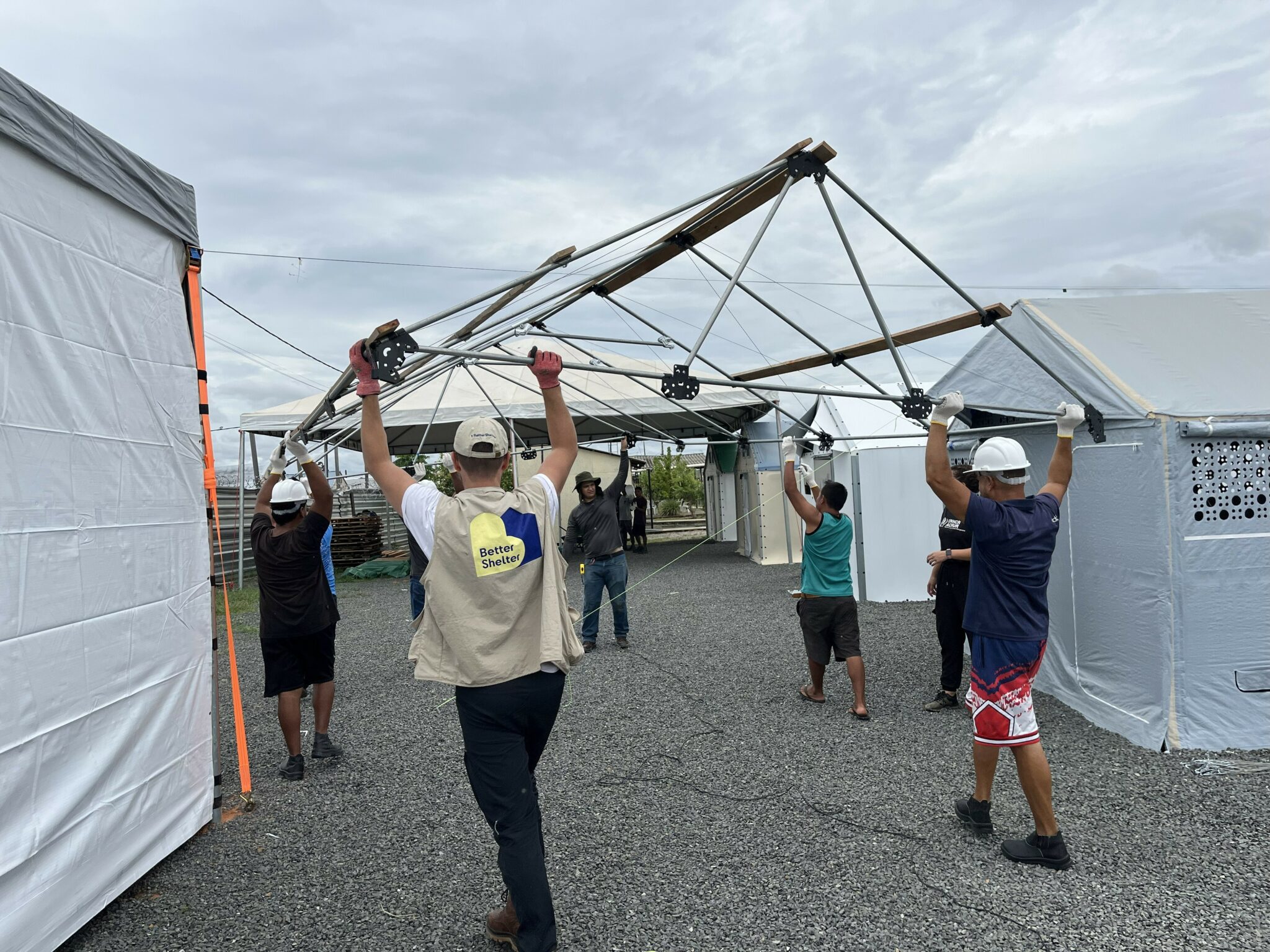
One of the pilots is underway in Boa Vista, in northern Brazil, in collaboration with the UN Refugee Agency (UNHCR), the Brazilian government’s Operation Welcome, and Hermanitos, an organization that supports Venezuelan refugees and migrants in the country. The new structures are designed to provide greater comfort, durability, and efficiency in the use of resources, contributing to a safer environment for the refugees and migrants and more respectful with the nature. In a humanitarian context, every sustainable action represents an important step toward building a more dignified, compassionate, and mindful future for all.
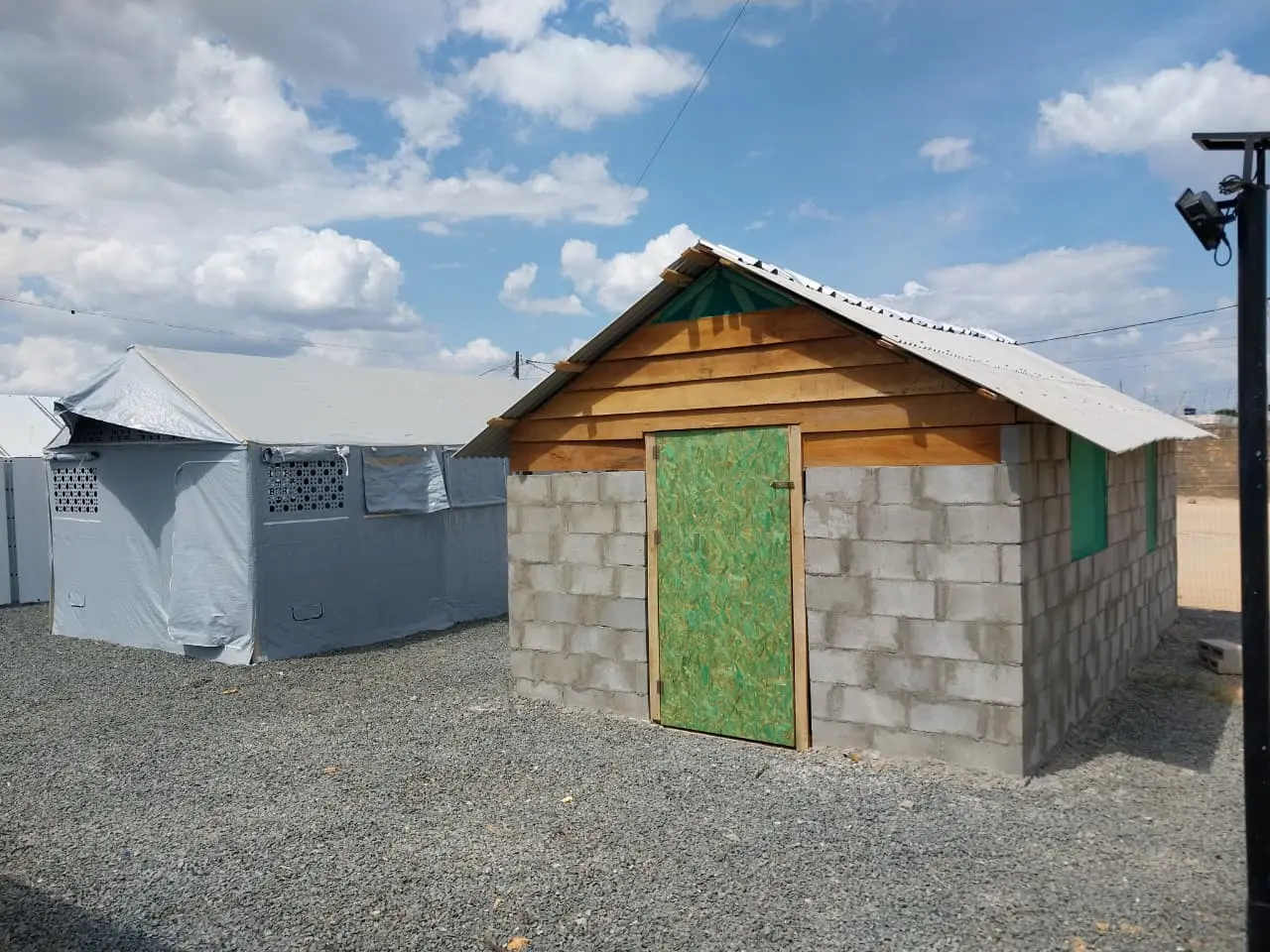
We are learning how the shelters can evolve over time, from emergency structures to more durable homes built with locally sourced materials.
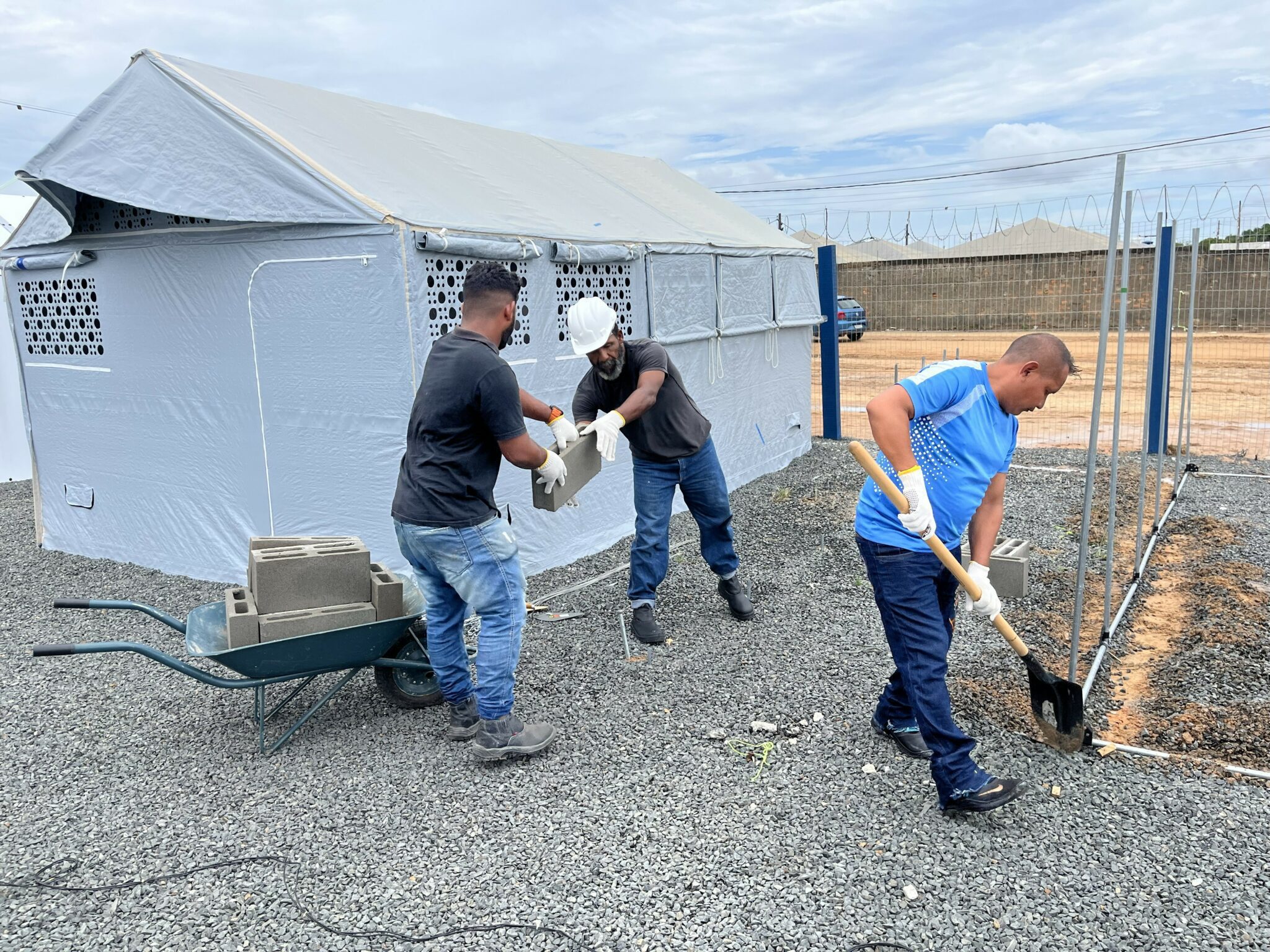
The teams add hollow blocks to form the walls. In an emergency, the shelter can be quickly covered with canvas or tarpaulin, and later upgraded with more durable materials as they become available, without residents having to move out. Photo: Better Shelter
In the second phase of the pilot, carried out in October, we added stronger and heavier materials to the frame. Volunteering venezuelan refugees played a central role selecting the materials, teaching us how they would build, giving input on design of windows and doors and providing suggestions for improvements on the frame. The walls were built with concrete blocks, the roof with fibre cement sheets, and wooden battens formed the frames for doors and windows.
Our team also led three hands-on workshops: one on anchoring systems for temporary shelters, another on improving the tent cover and frame, and a third focused on exploring new ideas for modularity and design.
We are recording all results and feedback from participants, volunteers, community members, and representatives from Hermanitos and ACNUR, which will guide the next steps in the development of this new shelter portfolio.

Window frames added to the shelter. Photo: Better Shelter

Teams from ACNUR/UNHCR, Hermanitos and Better Shelter attach a roof to one of the prototypes. Photo: Better Shelter
If you want to learn more or partner with us as an innovation funder or humanitarian co-developer, please reach out.