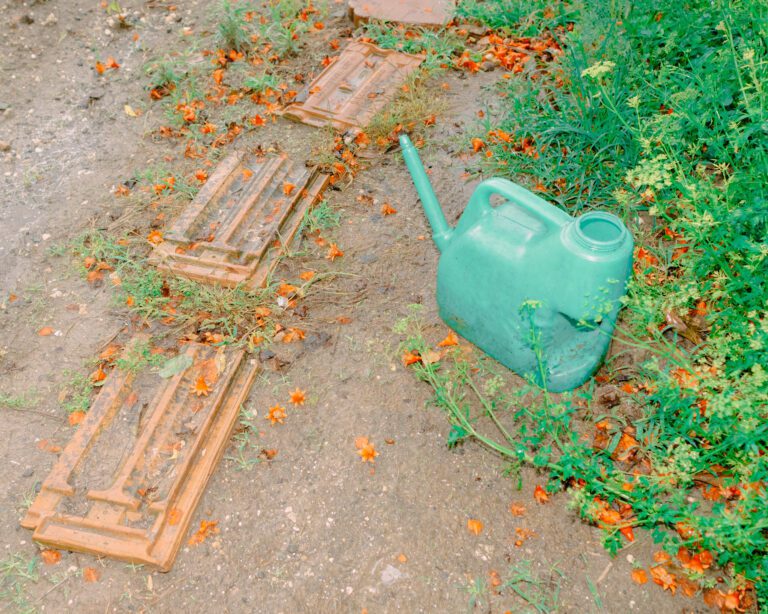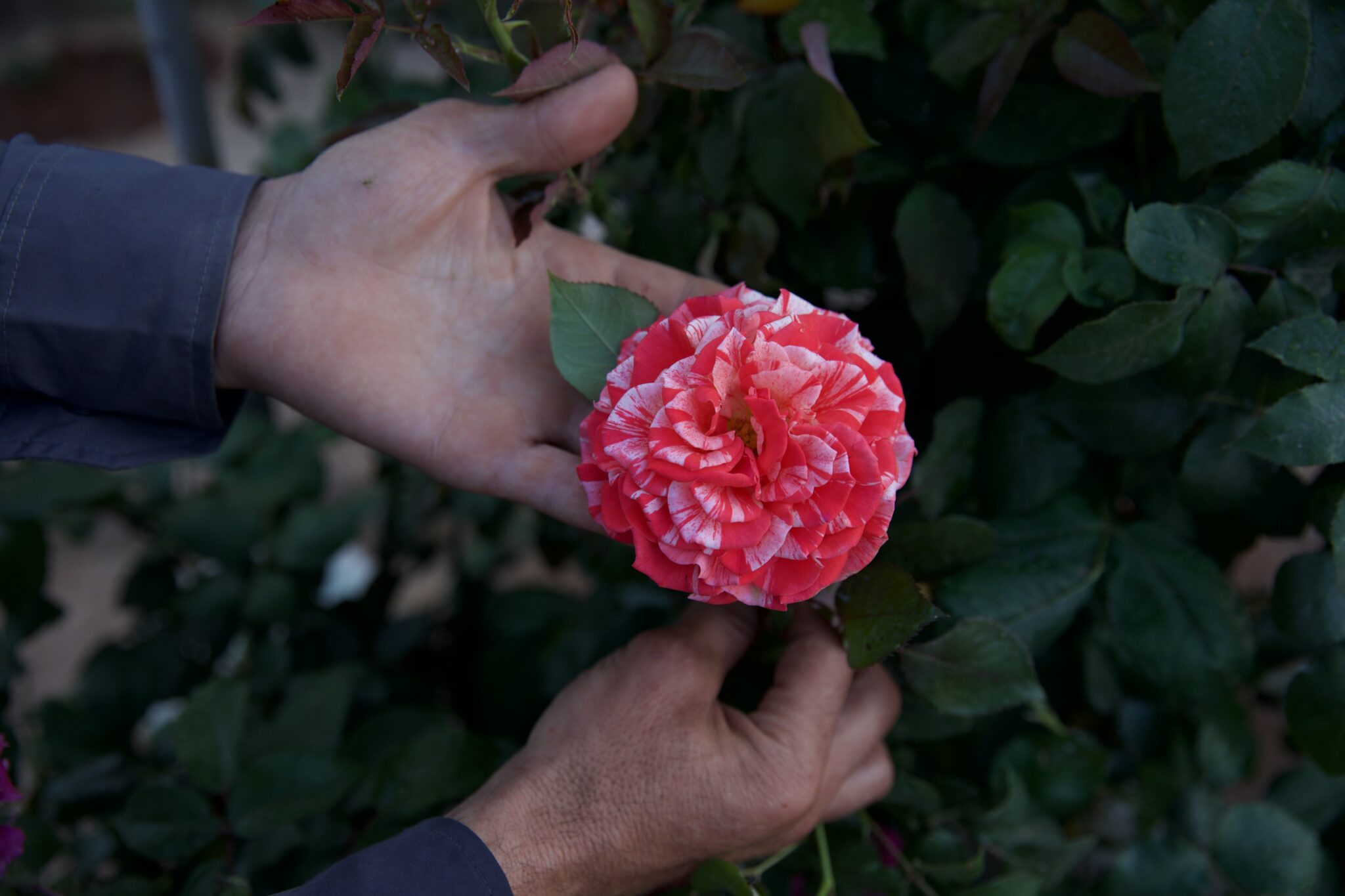
Behind the wall of his shelter in the countryside of Idlib, Syria, 38-year-old Omar tends a garden full of life. More than fifty different types of plants grow here. He waters the flowers and works the soil, every day.
“A plant is like a little child,” says Omar. He repeats this to his three children as they garden together, teaching them that living things need care. Their small hands hold fragile leaves as they learn.
Holding on to what remains
Five years ago, Omar lived in a village in Idlib’s southern countryside. He worked with trees and plants there too, drawn to their beauty. Displacement has changed his life, but not his sense of hope. “This area may not be mine for real, but it is mine for now.”
This is where Omar wants his children to make better memories. To laugh. To dream of a brighter future. In the middle of displacement, he has created a refuge for them, trying to protect them from the marks war leaves behind.
When life had to change
In 2015, a rock mine explosion caused a facial injury that changed Omar’s daily life. He could no longer swim or exercise. His doctor warned that too much physical strain could cost him his eyesight. That is when Omar turned to gardening. Plants became his companions, their quiet endurance reflecting his own.
A place called home, for now
Today, the shelter belongs to Omar and his family. Flowers and curtains decorate the space. Schoolbooks lie scattered where the children study. A weathered photo album, carefully kept, holds memories from more than 15 years ago.
“They have beautiful meanings,” Omar says softly, running his fingers over each image. The faded photographs bring back memories of life before the war—before his country was divided, and before its violence left visible marks on his face.
He often thinks of his old house, built by his brother. It was always filled with guests and laughter. “A home is everything,” he says. “The word home doesn’t leave a person from birth until death. Home is a whole life.”
When Omar left his village of Maarbalit, he tried to bring everything with him. But little by little, it was lost. During their first winter of displacement, the family lived in a worn-out tent in the middle of an olive field. To stay warm, they were forced to burn or throw away what they had managed to carry.
After everything they have been through, security is hard to feel. “This is a home,” Omar says, “and yet not. We don’t know whether we will stay or leave tomorrow. We’re always on the move, like the waves of the sea, and we never know where we may have to go if war breaks out.”
Growing resilience
Back in the garden, Omar continues to grow something lasting. Each plant carries a story of survival, roots holding on, even when pulled from the ground. It is a quiet expression of resilience. A longing for stability. A safe place, in a life shaped by uncertainty.
From 2024 for What Makes a Home.