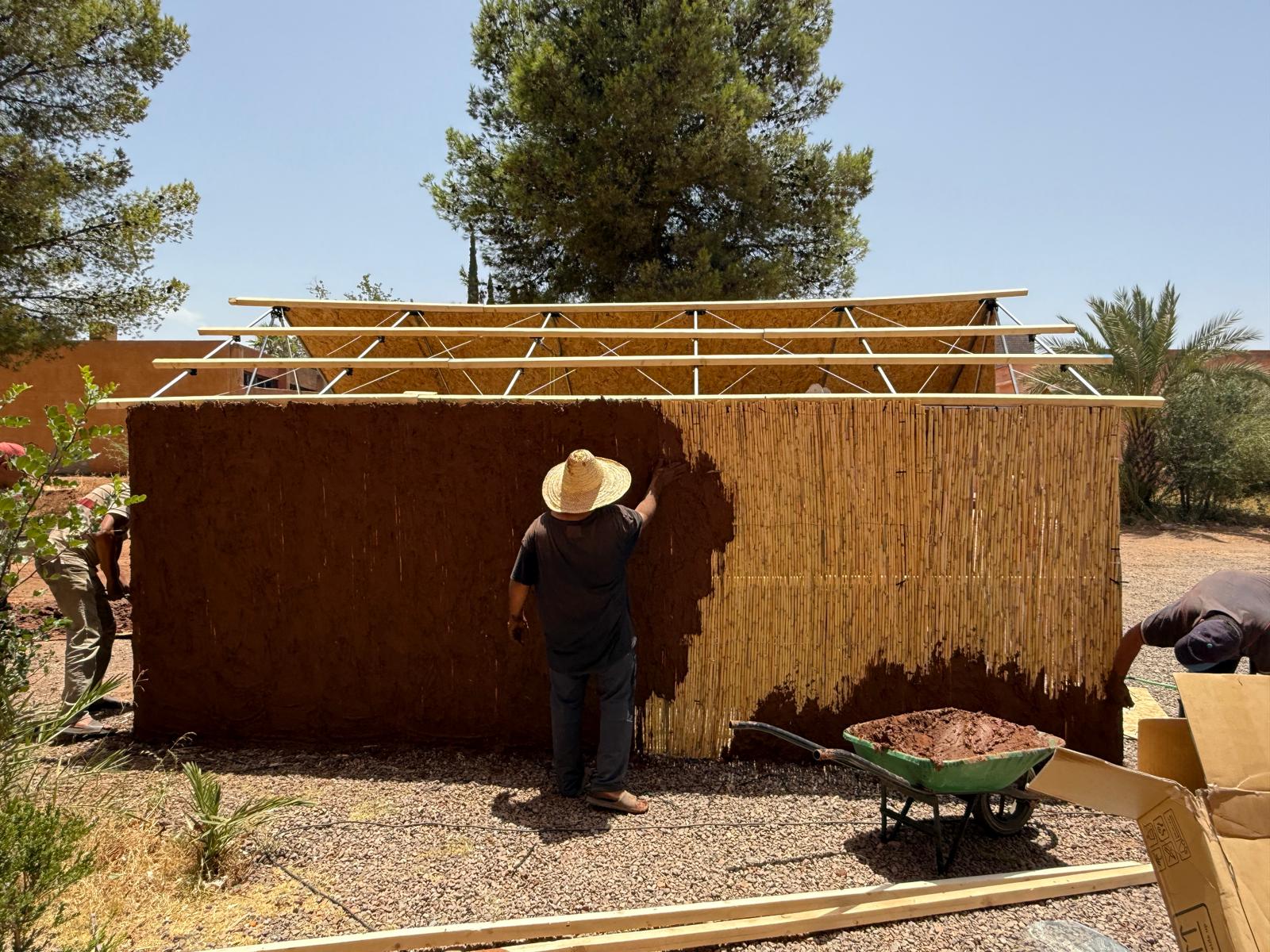
In Morocco, we worked with the Moroccan Red Crescent (MRC) and the International Federation of Red Cross and Red Crescent Societies (IFRC) to develop a shelter system that can meet urgent needs and be improved over time. The tests demonstrated how the same frame could support a tent cover, prefabricated panels and locally available materials, giving implementing organisations options for different stages of a response.
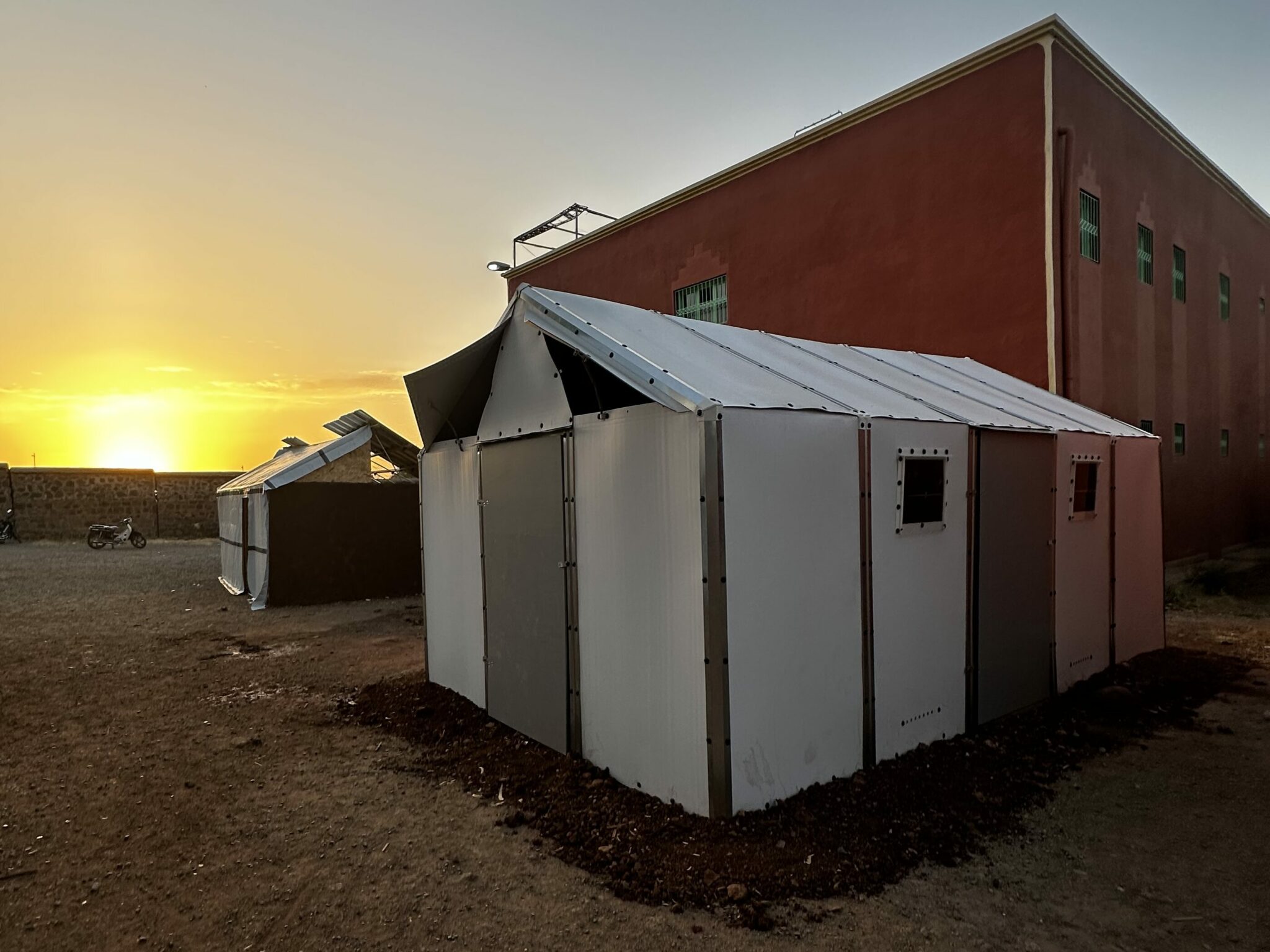
Following the September 2023 earthquake in Morocco, we worked with MRC and IFRC to provide nearly 1,500 shelters across four provinces. Used as temporary homes, classrooms, accommodation for teachers and health centres, they supported communities while rebuilding continued. The co-design pilot built on this partnership.
Faster, greener, closer and more affordable

A shelter provided in an emergency may serve a family for much longer than first expected. Our new system is built around one frame. It can be combined with a tent cover for a quick, affordable response. As needs change, families can build on the same frame with local materials and insulation.
This supports our goal to make shelter responses faster, greener, closer to communities and more affordable.
“It can be used for emergency response, and once the emergency phase is over, we can quickly remove parts of it and add local materials, securing them in place.”
Soufiane, Senior Officer with the Moroccan Red Crescent
Using what is available locally
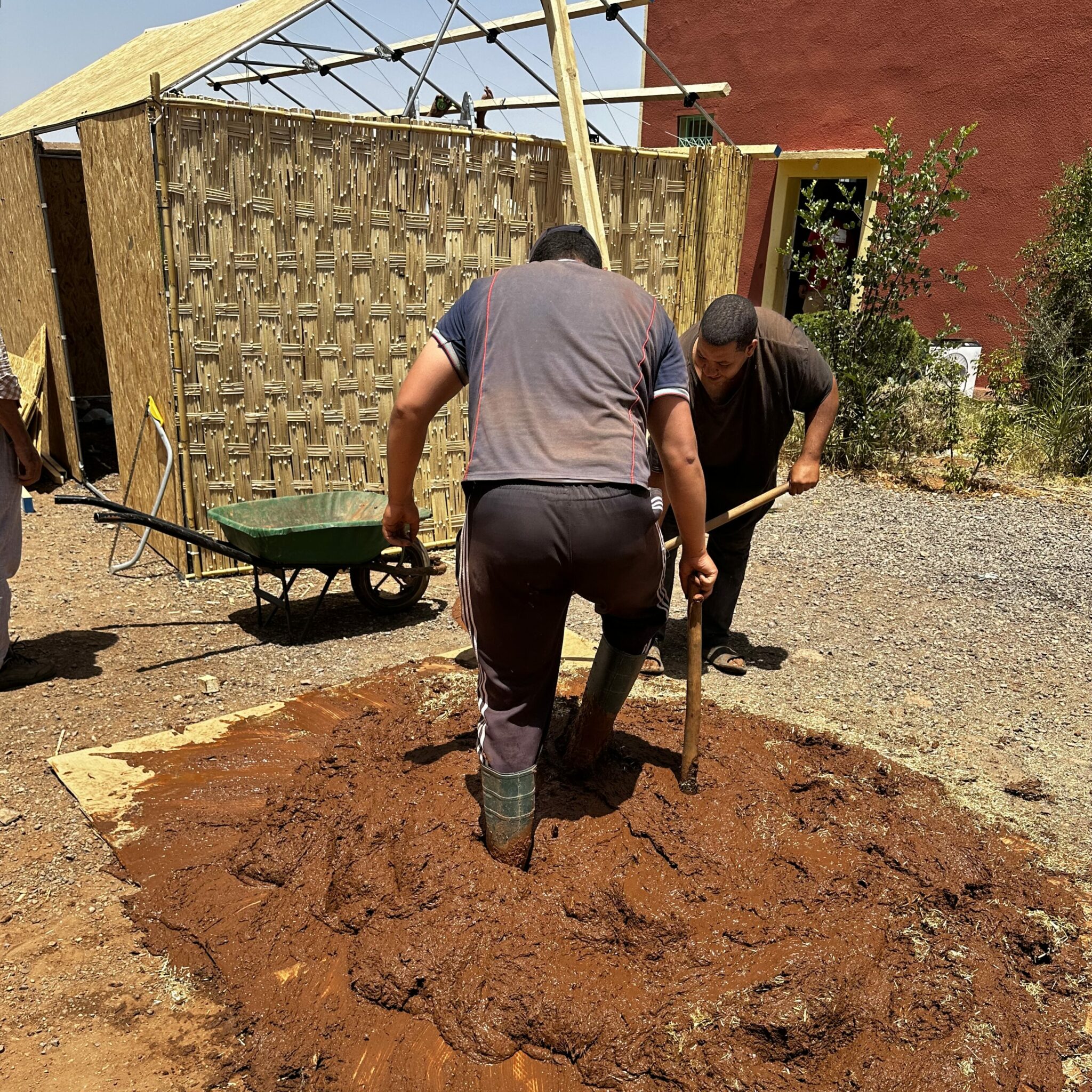
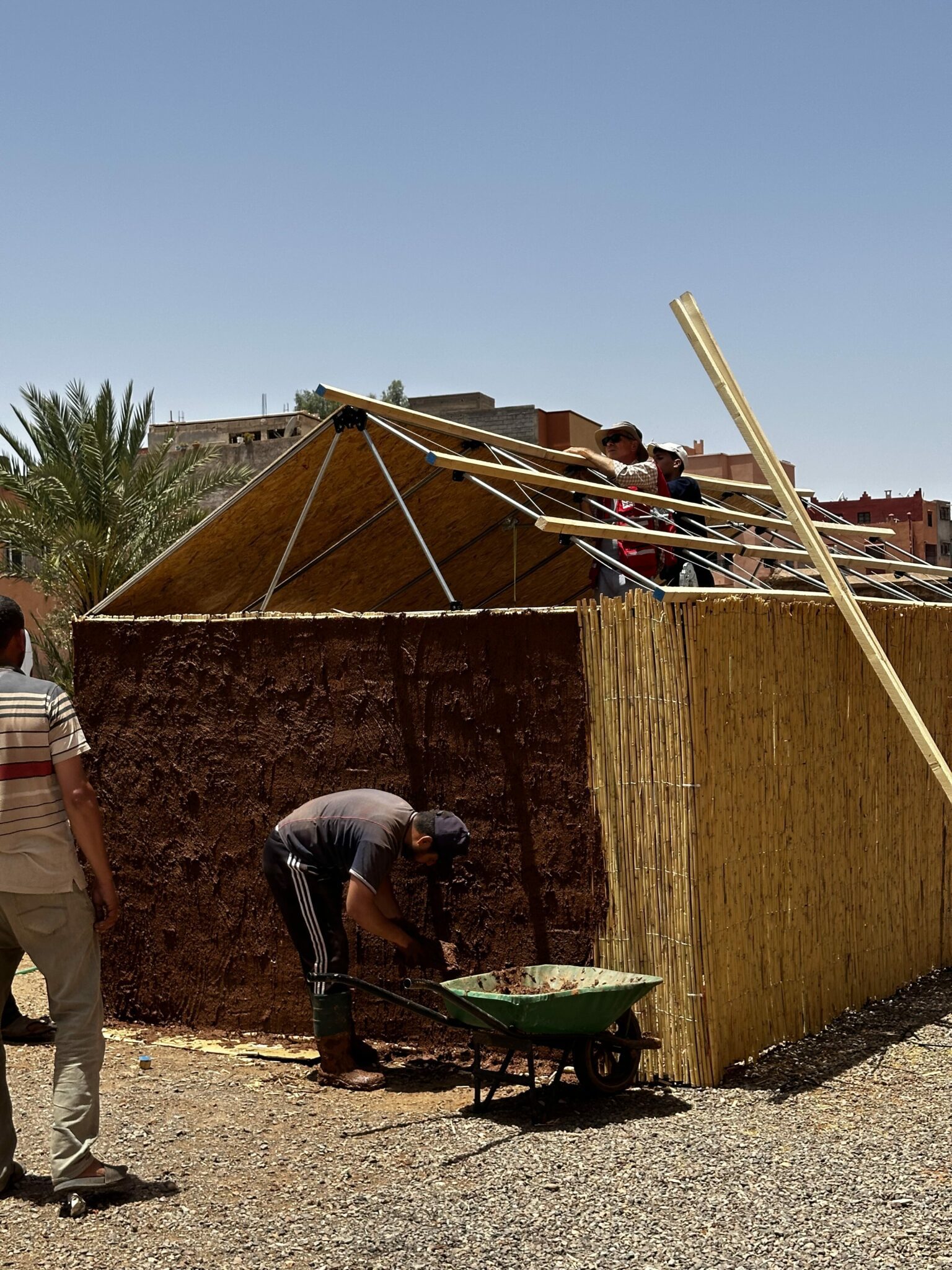
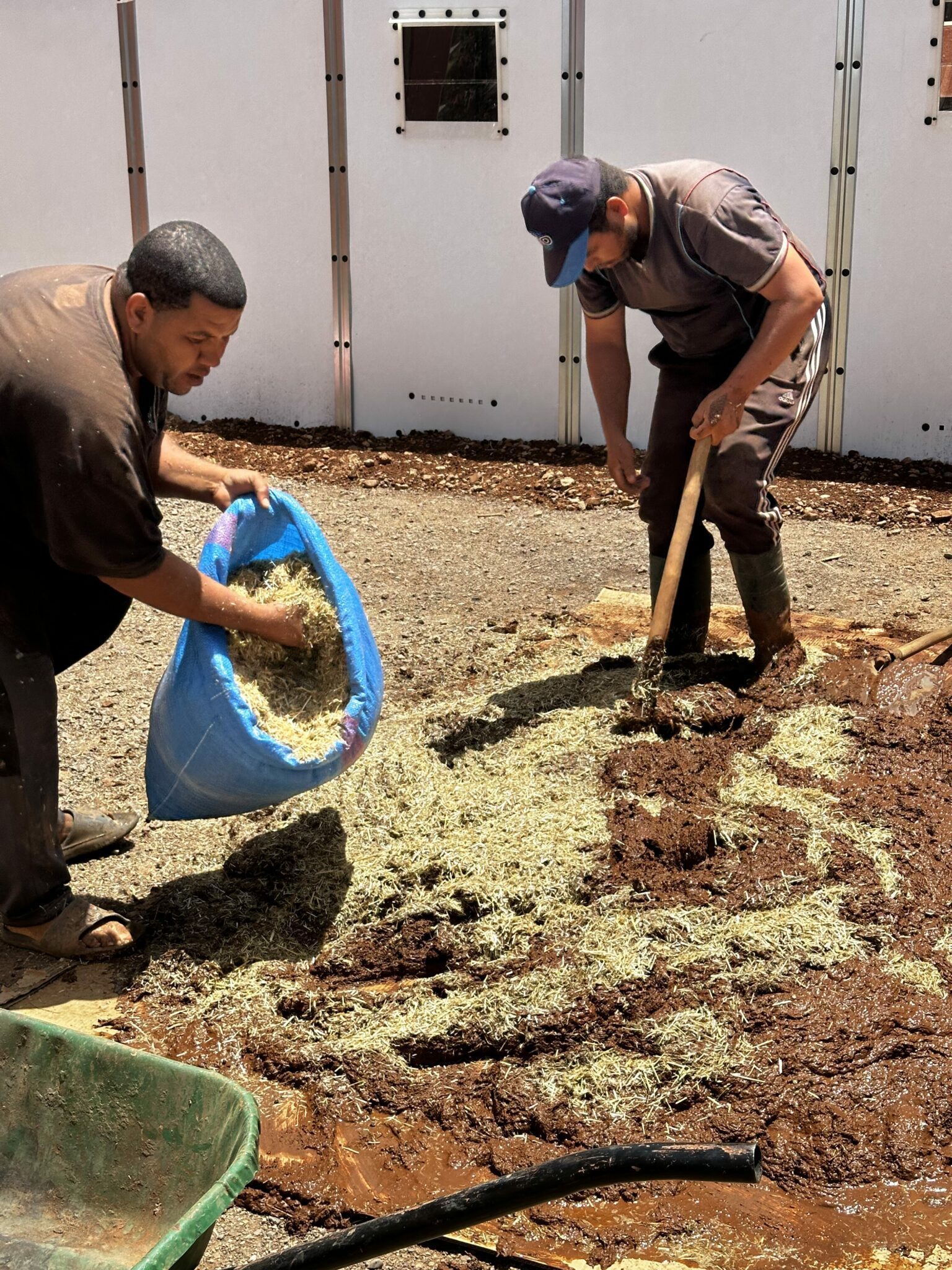
In Tahannaout, at the foot of the Atlas Mountains, the teams on the ground explored how different materials and building skills could be used with the frame. They bought cane at the local market and coated it with a mixture of soil, straw and water, guided by local people experienced in this building method. They also tested wood panels, wooden battens and corrugated metal sheets.

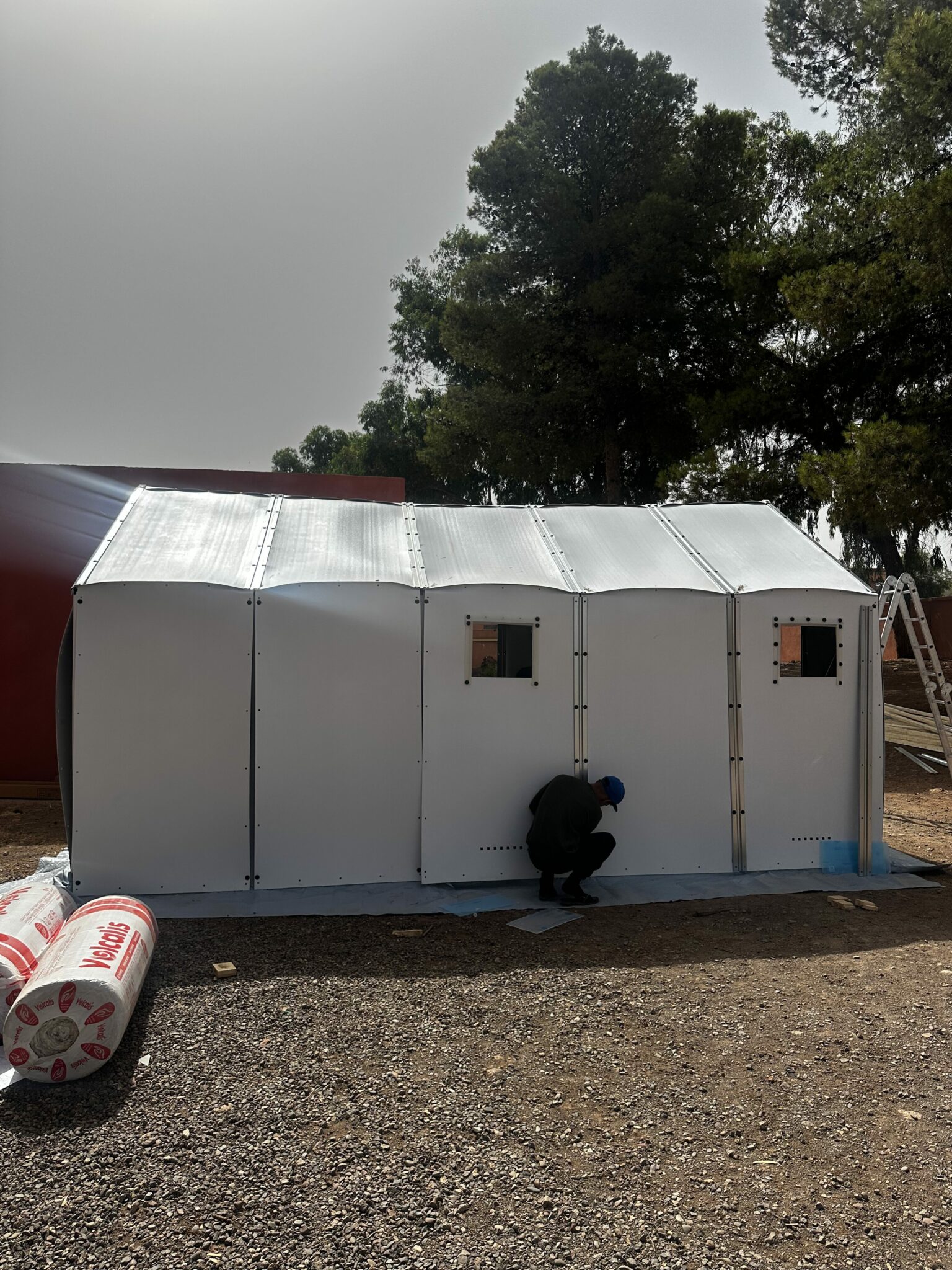
To find ways of improving comfort in hot and cold weather, the teams also tested insulation, using mineral wool during the first visit and loose wool during the second.
Loose wool was placed over wood panels and held in place with chicken wire mesh beneath the tarp roof covering. A local mason and his team also taught the pilot team how to build rammed earth walls, known as tabiya, sharing traditional building knowledge.
Using local materials can give both implementing organisations and displaced families more choices when improving a shelter. It can also reduce reliance on transporting building materials over long distances and make use of skills already present in the community.
A frame that can adapt over time
When people lose their homes, they need somewhere to stay quickly. As time passes, they may need better insulation, more privacy or materials that last longer. To develop a shelter system that allows these changes, we tested it in real conditions with the teams who will assemble and adapt it.
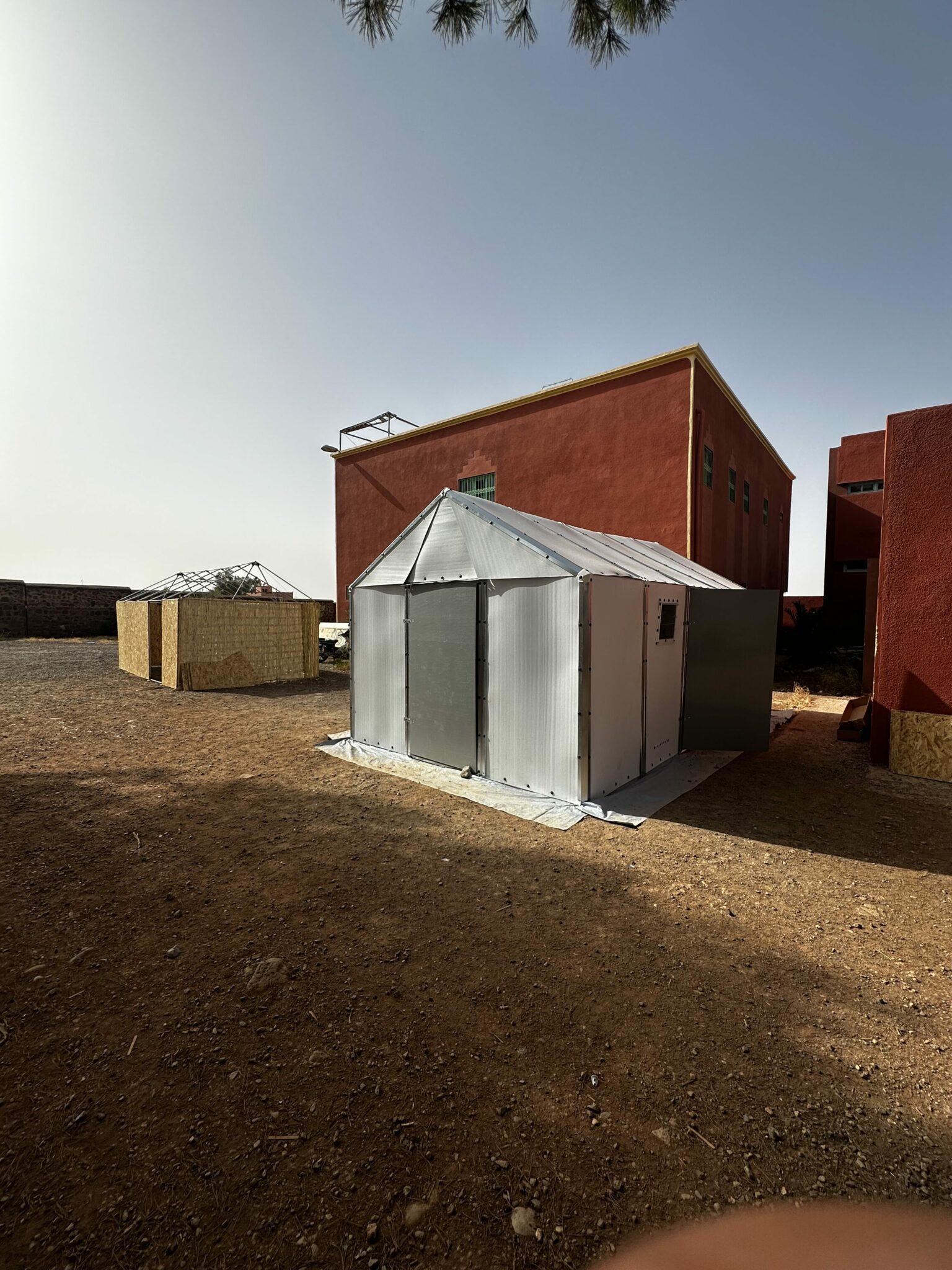
Together with MRC and IFRC, we tested three versions of the same frame: one with a tarpaulin tent cover, one with prefabricated panels and one covered with locally available materials. The teams built the shelters on site, tested materials and shared feedback.


Testing and improving together
MRC and IFRC brought expertise in shelter and humanitarian response, alongside experience installing our shelters in Morocco. Working together helped us identify what worked well and where the design needed to improve.
The hard, rocky ground made the anchors difficult to install. MRC and IFRC suggested a more flexible solution, and we returned with revised prototypes to test together.
Feedback from the implementing organisations also helped us simplify connections in the frame and identify ways to make local materials easier to attach. These changes came from the people assembling the shelters and working through the difficulties on site.
To learn more about the technical details or discuss how the system could support your work, contact our team.
The pilot in Morocco is part of a wider programme testing the new system in five countries. We also tested the system with UNHCR in Brazil, IOM in South Sudan, CARE and IYD in Türkiye, and SEEDS and STS in India.
Learning from the shelter response in Morocco
Alongside testing the new shelter system, we evaluated the shelters provided during the earthquake response. Our April 2026 evaluation included 58 household interviews. Families reported better sleep and less stress. A lockable door meant they could leave for work or visit relatives without worrying about their belongings.
The evaluation also highlighted the importance of insulation during hot and cold weather. These experiences reinforce why shelter development must consider both immediate needs and everyday life over time.