In Assam, seasonal floods are part of life. But in recent years, the water has risen higher, stayed longer, and taken more with it. When homes disappear overnight, rebuilding is not just about walls and roofs, but about finding a way back to everyday life. This is Mongal’s story from the What Makes a Home photo project.
“I have never travelled further than Silchar,” says Mongal, around sixty years old.
Silchar, a town of about 200,000 people, lies a few kilometres from his village in Assam, northeastern India. In the summer of 2022, floodwater reached almost two metres high. His house did not collapse. It moved. The current lifted it and carried it away.
Today, his new shelter stands on a raised clay plinth, surrounded by palm and betel trees. A grassbird chirps nearby. In the neighbouring garden, a lamb bleats, calling for its mother. Every now and then, an autorickshaw horn drifts in from the road. Around the shelter, white jasmine blooms beside young betel saplings. Mongal planted them after the flood.

Losing income
Before, he sold betel nuts at the market. In a good year, he earned about 9,000 rupees. After the water destroyed his plants, his income was almost cut in half.

A new shelter
This week, one of his daughters is visiting with her husband. She steps out of the shelter wearing dark red. Mongal watches her.
“My daughters are my life,” he says. “Nothing else matters.”
His knees hurt when he walks. Mongal’s wife died more than twenty years ago, so his sister, Champa, ten years older than him, comes and stays for long periods. Her eyesight is failing, but she keeps the shelter in order and cooks for Mongal.
There are three small rooms. In the first, clothes are folded neatly on a rack. A radio with large speakers sits on a shelf. The speakers no longer work, but Mongal keeps them anyway. His younger daughter once listened to songs on them.
The middle room holds a wide bamboo bed. A small opening in the floor stores vegetables, kept cool by the earth below. Wooden double doors, bought from a nearby town, lead into the kitchen.
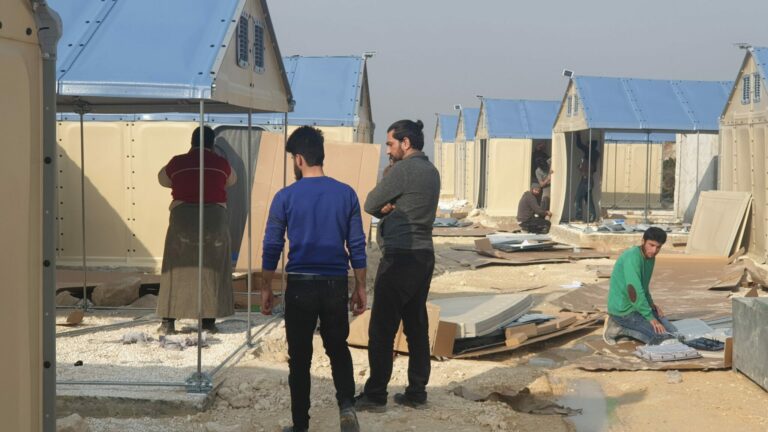
When he knew the flood was coming, Mongal left fast. For a month, he lived in a school nearby, turned into a temporary relief centre for people in the area. When the water receded, he returned and built a simple structure to survive in. Later, supported by SEEDS and Better Shelter, he moved here.
He hopes to build a brick house for himself and his sister. Their situation is under review by the government and may qualify for support.
“This shelter feels like home.”
Mongal

Starting over
After the flood, Mongal saved a few clay pots from the kitchen. He lost most of his documents, including proof of his land. Recently, he received a new voter ID card. In a few days, he will use it for the first time.
When Champa is away, Mongal cooks for himself. The doctor has told him to avoid meat, so most days, he eats rice with daal or vegetables.
On holidays, he walks to the nearby Hindu temple. On Mondays, the community gathers for pooja. Water is poured over the shrine. Incense burns. Coins are placed carefully at the base.

Shelters in Assam
- Assam is one of India’s most flood-prone states, shaped by large river systems and heavy monsoon rains. Flooding occurs every year, but in recent years it has become more severe and longer-lasting.
- In 2022, unusually heavy pre-monsoon and monsoon rains caused some of the worst floods in over a decade. Rivers including the Barak and Brahmaputra rose above danger levels, submerging towns and villages for weeks. The floods affected more than one million people across the state. Silchar and the surrounding Cachar region were among the hardest hit areas. Homes, crops and livelihoods were destroyed, forcing many families into temporary shelters.
- Better Shelter partnered with SEEDS India to support flood-affected families with shelters that were adapted using materials local to the region. More about the project here