
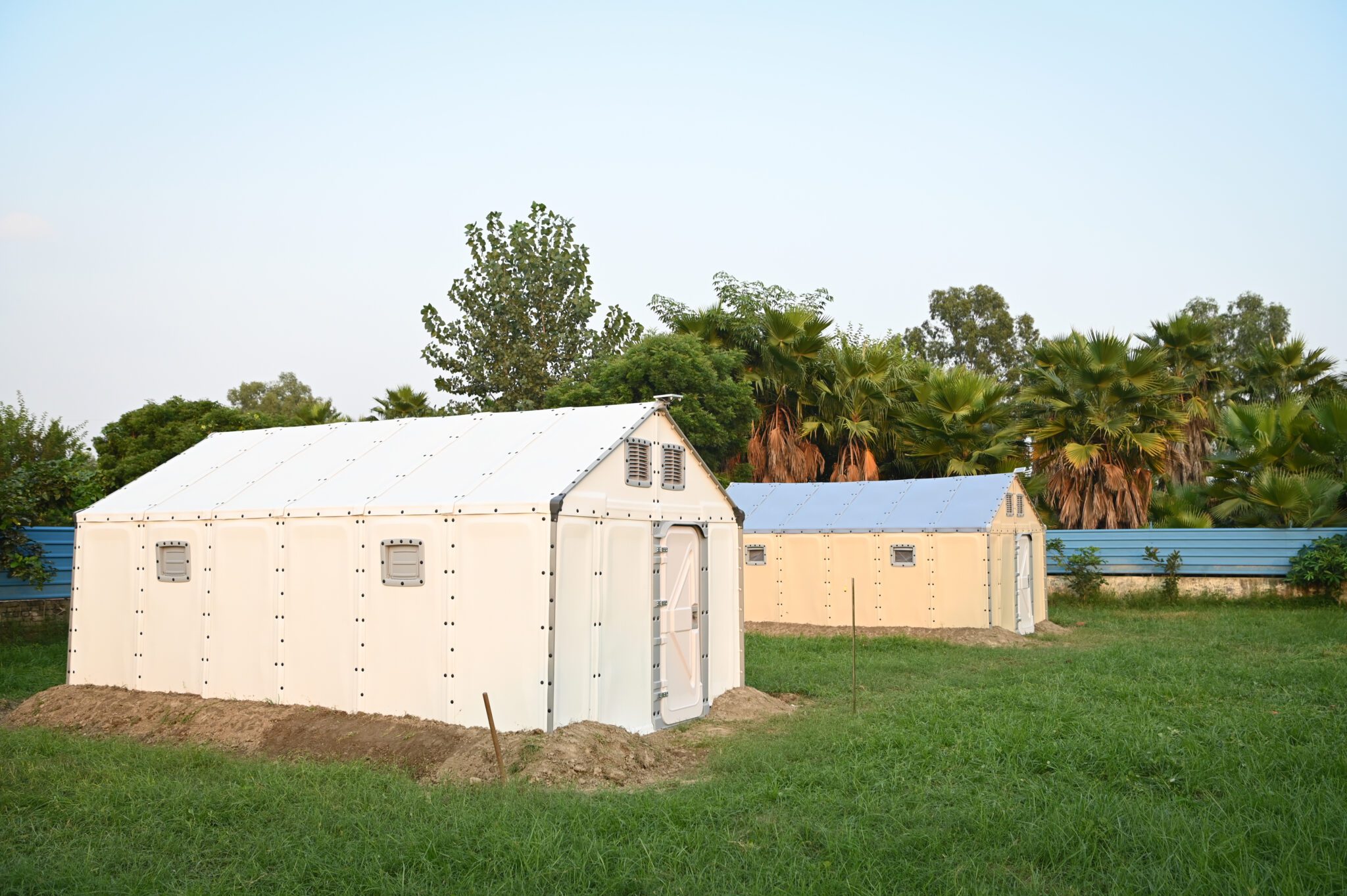
For six months, two versions of our Refugee Housing Unit (RHU) stood side by side in northern India. Tested with our partners SEEDS and Seeds Technical Services, the updated RHU v1.3 was up to 6°C cooler on average during the day.
In a field in Noida, Uttar Pradesh, in northern India, two Better Shelter Refugee Housing Units (RHUs) stood side by side for six months. Sensors inside each shelter recorded the temperature and humidity every three minutes, from floor to roof.
The test ran from September 2023 to February 2024. It set out to answer one question: do the changes we were developing for our updated shelter, the RHU v1.3, make it cooler inside?
We carried out the test with the Indian humanitarian organisation SEEDS and its technical partner, Seeds Technical Services (STS), to understand how changes to a shelter’s design affect thermal comfort. The results showed that the updated design lowered average daytime indoor temperatures by up to 6°C compared with the previous version, the RHU v1.2.
Why heat inside a shelter matters
Thermal comfort is how the temperature inside a shelter feels to the people living there. It depends on the air temperature, heat radiating from the walls and roof, humidity and air movement.
When it is hot outside, keeping a shelter cool becomes harder. Intense heat indoors is a health and protection issue, for people who have been forced to flee and for anyone exposed to extreme heat. It can lead to heat stroke and dehydration, which can be life-threatening. The risk is higher for young children, women, older people and people who are ill, who often spend more time inside.
As the climate changes, heatwaves come more often, hit harder and last longer. For people living through them, long exposure to heat is the main risk.
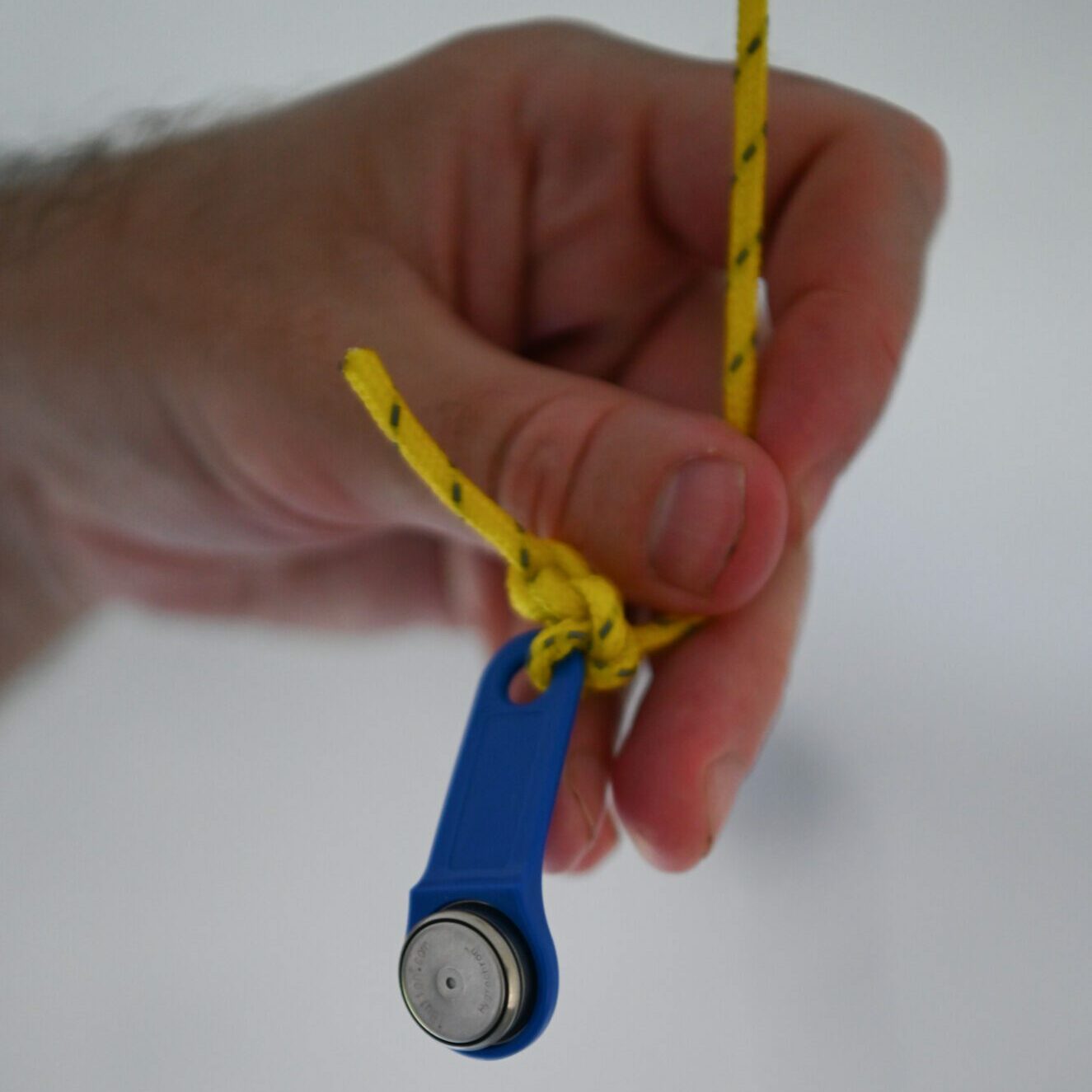
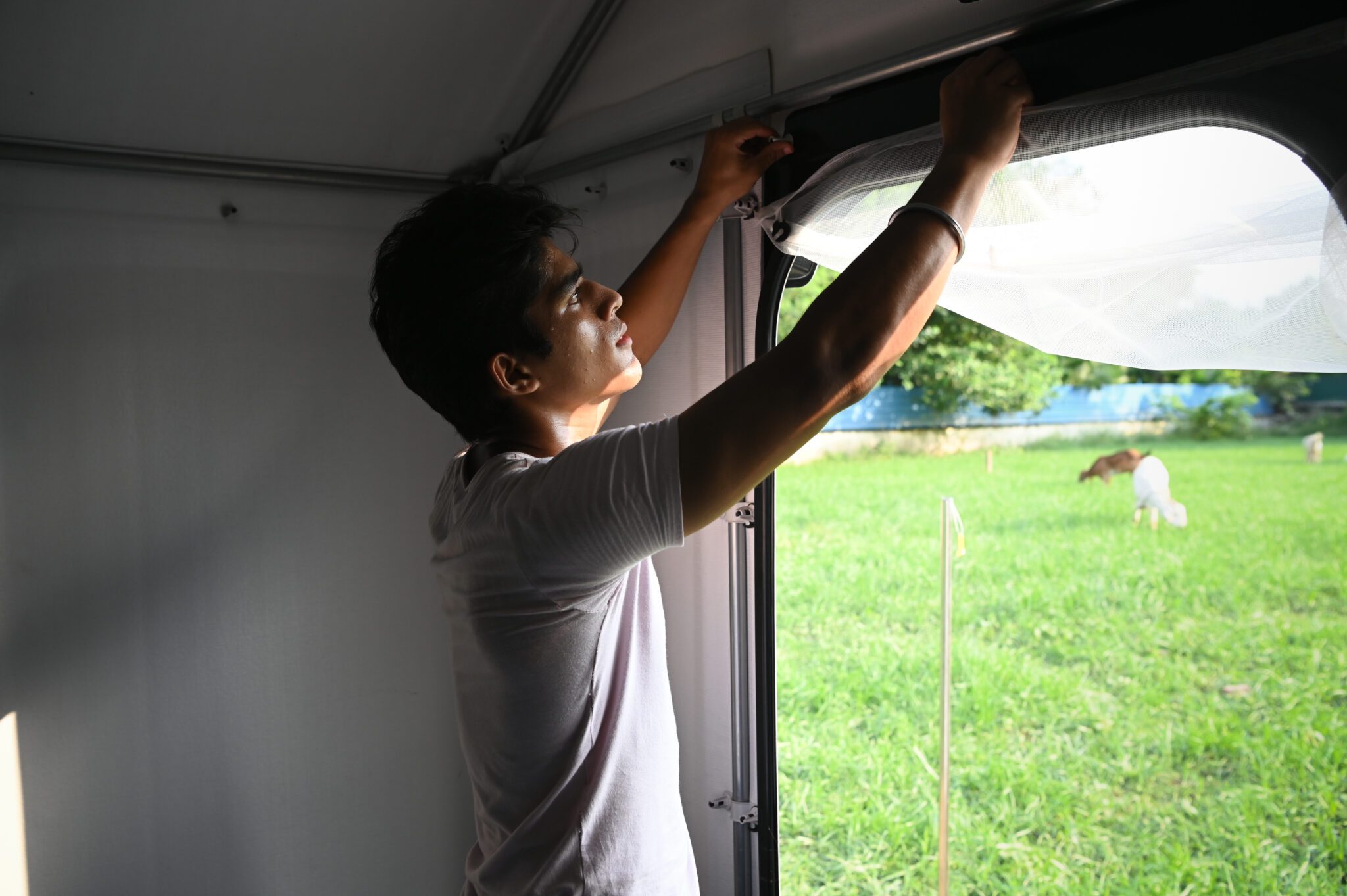
This is a challenge felt across the shelter sector. We do not have all the answers, but we believe the way forward is collaboration and exploration. We work with partners, test possible improvements and use the evidence to guide how we develop our products.
The RHU v1.3, launched in August 2026, builds on feedback from partners and experience in the field. Its updated panels and materials are designed to reduce indoor heat, improve privacy and make the shelter easier to recycle. Read more about the RHU v1.3.
Testing together
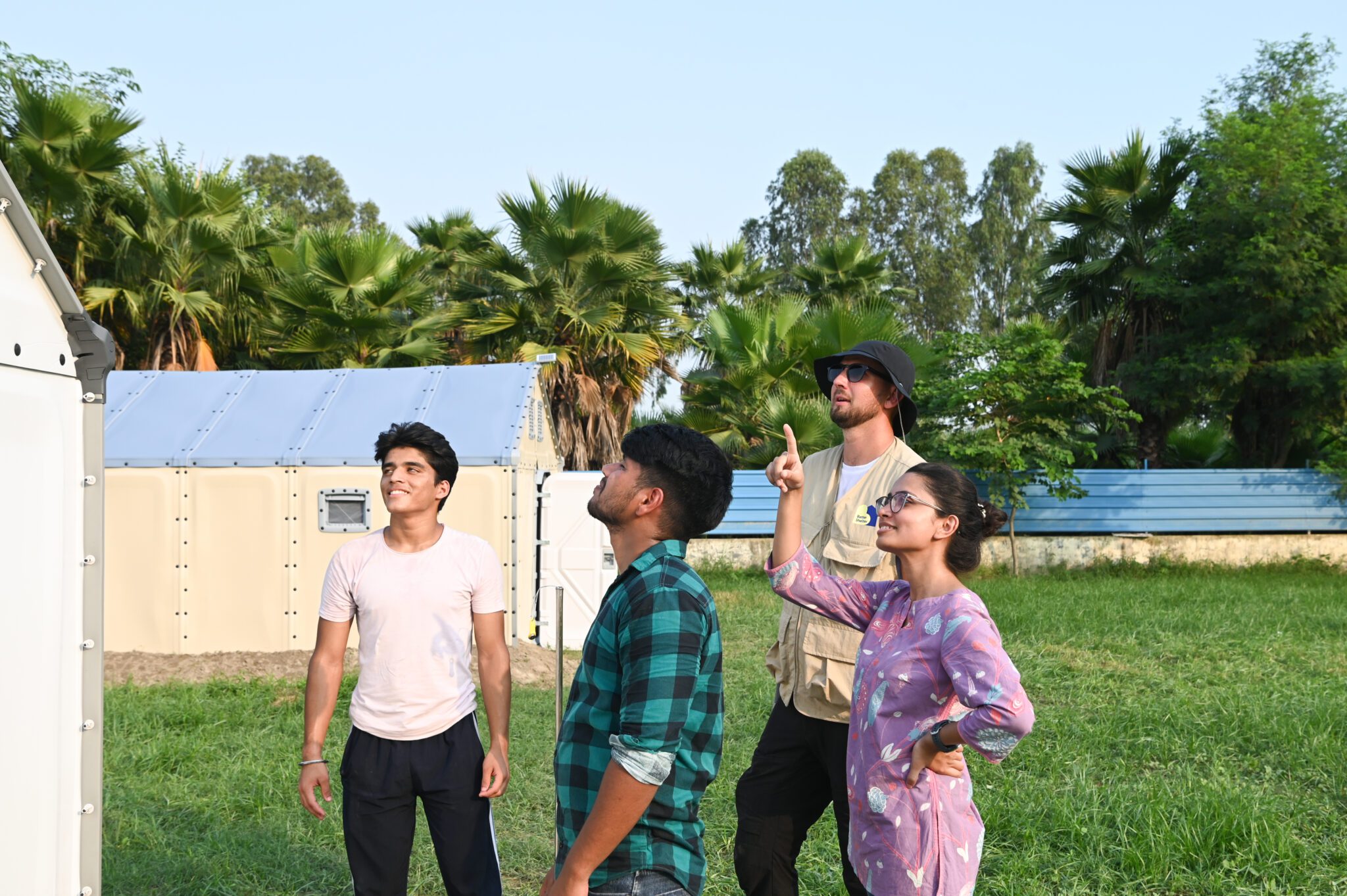
Our work with SEEDS and STS began in 2019 and has grown through shelter, disaster response and community projects across India. We have helped families rebuild after floods, and we have seen how people in Assam adapted RHU frames with woven bamboo and earth render. Those experiences showed us how much local knowledge can shape better shelter.
In Noida, we wanted to understand how design changes perform in real conditions. That meant combining technical evidence with the experience of partners who know the local climate, communities and ways of building.
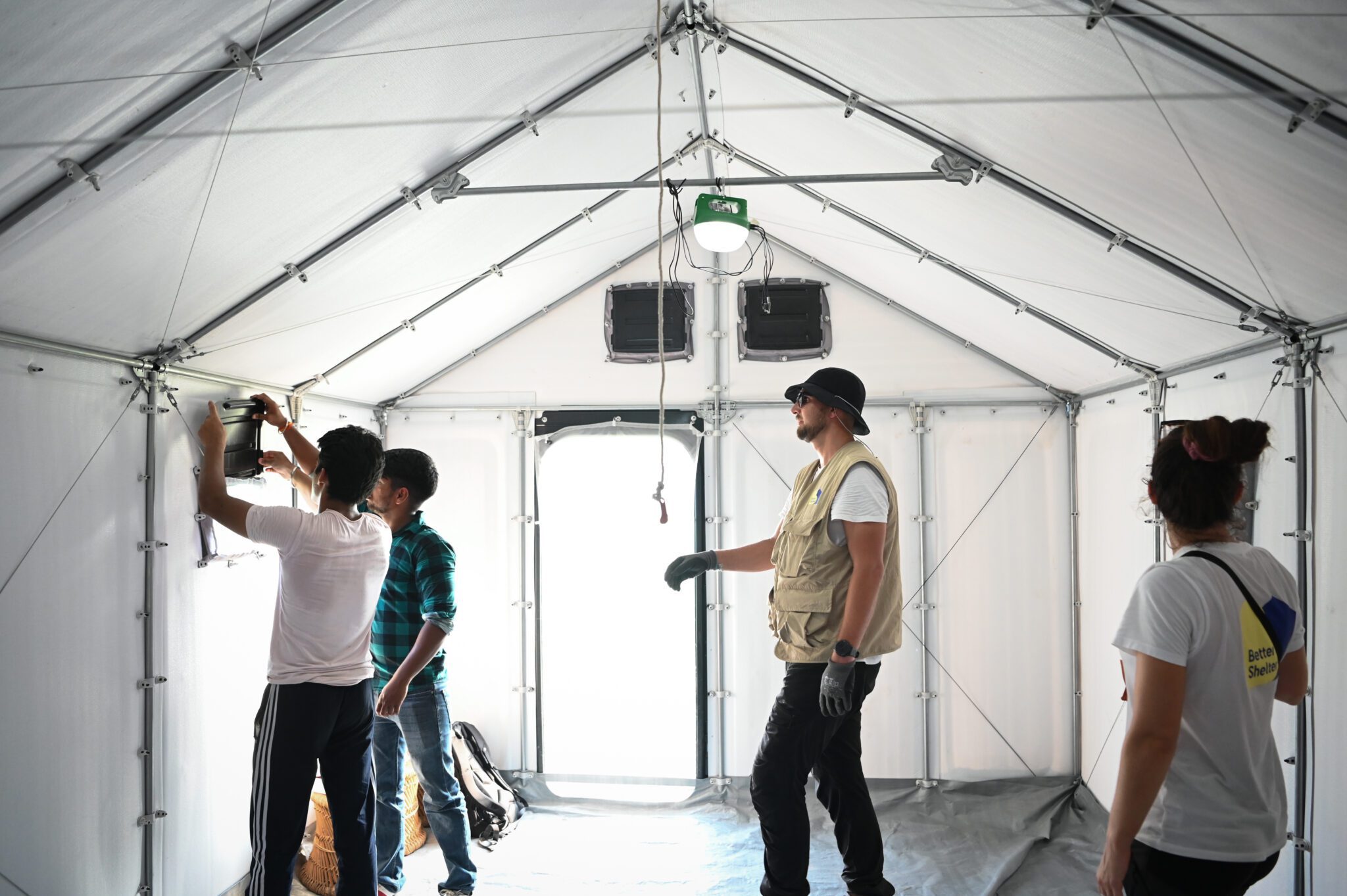
Each partner had its own role. SEEDS brought its experience as an implementing partner. STS, a social enterprise set up by SEEDS’ co-founders, carried out the technical analysis independently. Better Shelter led the product development.
“By combining that knowledge with systematic testing, we can make better-informed design choices and keep improving living conditions for the people who live in our shelters, and share learnings with others working on thermal comfort.”
Chloe Tiziani, Design Architect, Better Shelter
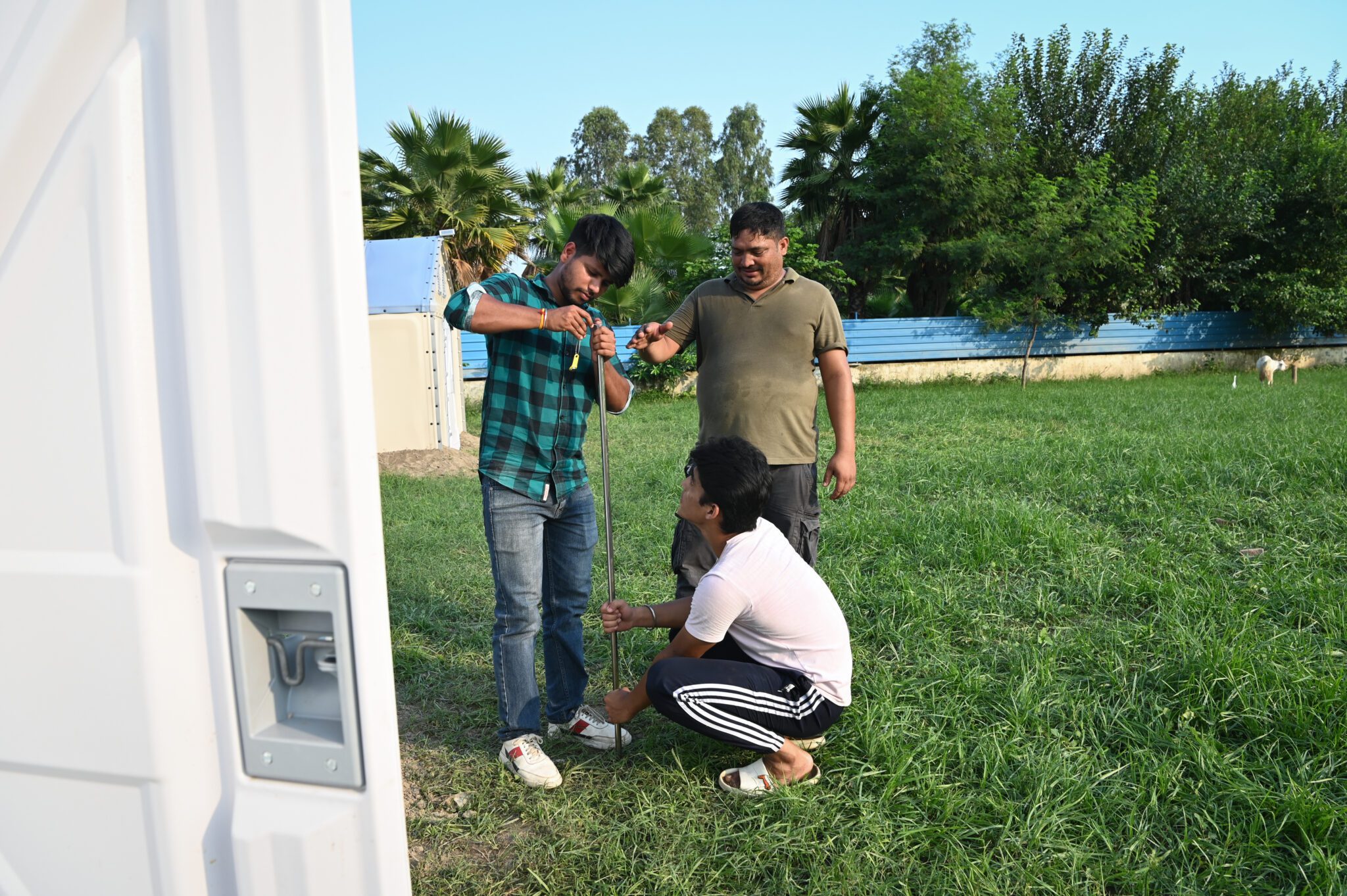
The two shelter versions were tested side by side under the same outdoor conditions. We recorded temperatures at floor, chest and roof height, with vents and windows both open and closed. STS then assessed the results independently against international standards for indoor comfort. This helped us understand what worked well and where we still need to improve.
Lower temperatures indoors
The updated design, the RHU v1.3, made a measurable difference to how hot the shelter got inside.
| RHU v1.2 | RHU v1.3 | |
|---|---|---|
| Average daytime temperature, autumn | Baseline | 3–6°C lower |
| Average daytime temperature, winter | Baseline | 1–3°C lower |
| Days above 35°C indoors, over 90 days | About 38 | 30 |
| Hours a day above 26°C, shelter fully closed | 6.9 hours | 3.9 hours |
Results from the side-by-side test in Noida, September 2023 to February 2024. With the shelter fully open, the reduction was up to 46%.
These results suggest that relatively simple design changes can help reduce heat indoors. But lower temperatures do not mean the problem is solved.
“We have changed the panels to reflect more sunlight and reduce indoor temperatures. Our tests show that these changes make a measurable difference, but there is more to do. By working closely with our partners and testing our designs, we can keep improving our shelters to better meet people’s needs.”
Eva Porcuna Ferrer, Design Engineer, Better Shelter
What we learned, and what comes next
The tests showed that design choices can make a measurable difference to the lives of people living in our shelters. They also gave us a clearer direction for what to explore next.
“Our findings show that external shading had the greatest impact on reducing indoor heat, while ventilation also helped lower temperatures. These results give us a clearer direction for further testing, but more work is needed to improve thermal comfort throughout the year.”
Seeds Technical Services (STS)
Based on the results, we will focus on three areas:
- Keeping shelters cooler without electricity. We will test ways to reduce indoor heat without fans or air conditioning. External shading made the biggest difference in our tests, so we will explore different shading solutions alongside better ventilation.
- Testing alternative materials. We will test locally available and engineered materials for wall panels, roofs, insulation and surface finishes, and measure how different materials and combinations affect indoor temperatures, heat gain and overall thermal performance.
- Developing the next-generation RHU. What we have learned from the RHU v1.3 and the material tests will guide the next shelter design. Our aim is to make shelters more comfortable throughout the year while keeping them durable, affordable and quick to assemble.
Better shelters through shared learning
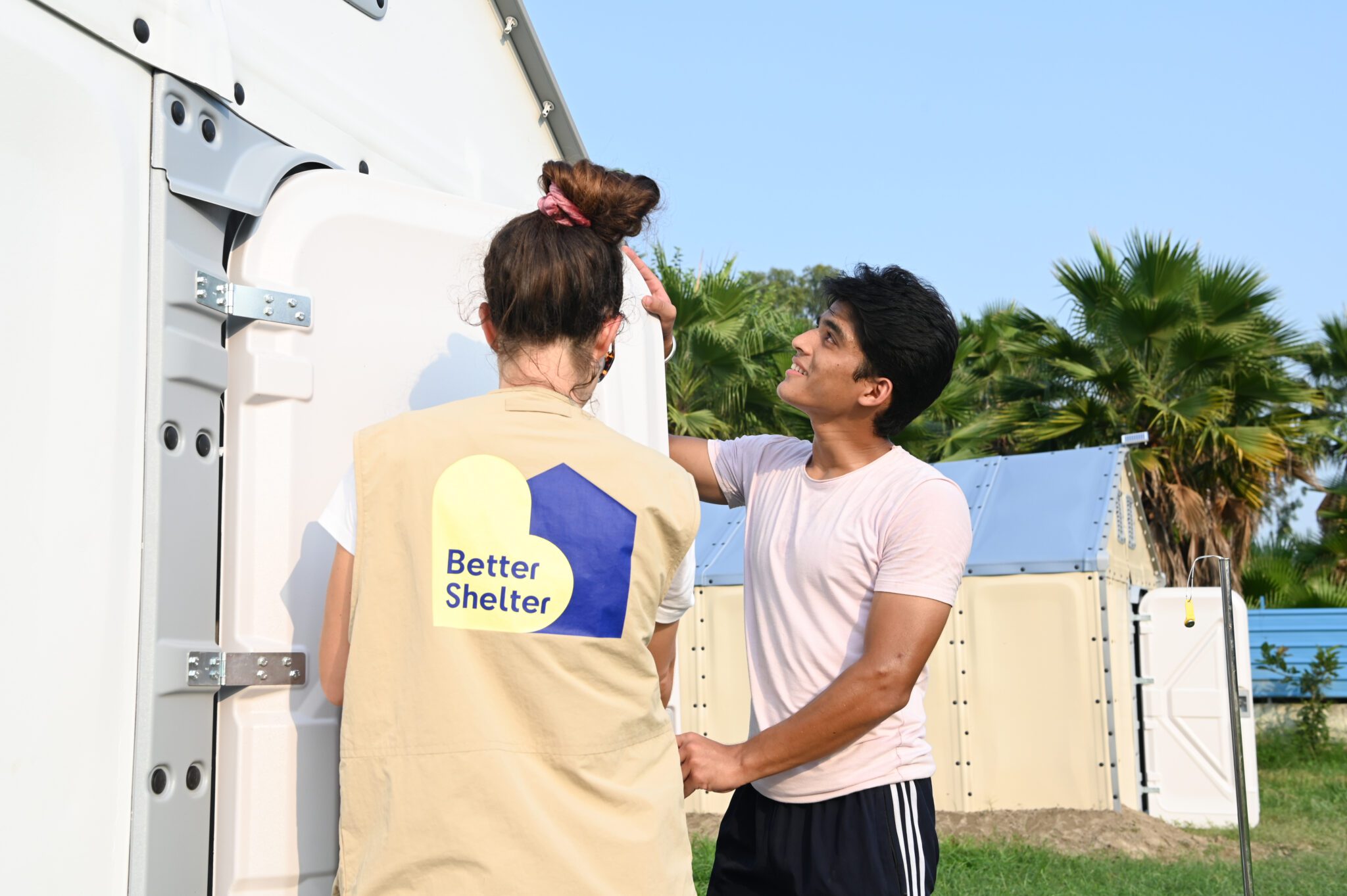
No single test can answer every question about shelter comfort. But careful testing, independent analysis and close collaboration help us understand what works, what needs to improve and where to focus next, so we can make our shelters better for the people living in them.
Thank you to SEEDS and STS for bringing their expertise and experience to this work.
Frequently asked questions
How much cooler is the RHU v1.3 than the RHU v1.2?
In a six-month test in Noida, India, the RHU v1.3 had average daytime indoor temperatures 3–6°C lower than the RHU v1.2 in autumn, and 1–3°C lower in winter. Over a 90-day period, it also had fewer days above 35°C indoors: 30, compared with about 38.
What is thermal comfort in a shelter?
Thermal comfort is how the temperature inside a shelter feels to the people living there. It depends on air temperature, heat radiating from the walls and roof, humidity and air movement.
Why is indoor heat in shelters dangerous?
Intense heat indoors can lead to heat stroke and dehydration, which can be life-threatening. The risk is higher for young children, women, older people and people who are ill, who often spend more time inside. As the climate changes, heatwaves come more often, hit harder and last longer.
How was the shelter temperature test carried out?
An RHU v1.2 and an RHU v1.3 stood side by side in Noida, Uttar Pradesh, from September 2023 to February 2024. Sensors recorded temperature and humidity every three minutes at floor, chest and roof height, with vents and windows open and closed. Seeds Technical Services then assessed the results independently against international standards for indoor comfort.
Who carried out the study?
Better Shelter worked with the Indian humanitarian organisation SEEDS and Seeds Technical Services (STS), a social enterprise set up by SEEDS’ co-founders. SEEDS contributed its experience as an implementing partner, STS carried out the technical analysis independently and Better Shelter led the product development.
What makes the RHU v1.3 cooler?
The RHU v1.3 has updated panels and materials that reflect more sunlight and reduce heat indoors. They are also designed to improve privacy and make the shelter easier to recycle. The RHU v1.3 was launched in August 2026.
What will Better Shelter test next?
Better Shelter will test ways to keep shelters cooler without electricity, such as external shading and better ventilation. It will also test locally available and engineered materials for walls, roofs, insulation and surface finishes, and use the findings to develop the next-generation RHU.
What reduced indoor heat the most?
According to Seeds Technical Services, external shading had the greatest effect on reducing heat inside the shelters. Ventilation also helped lower temperatures.


