
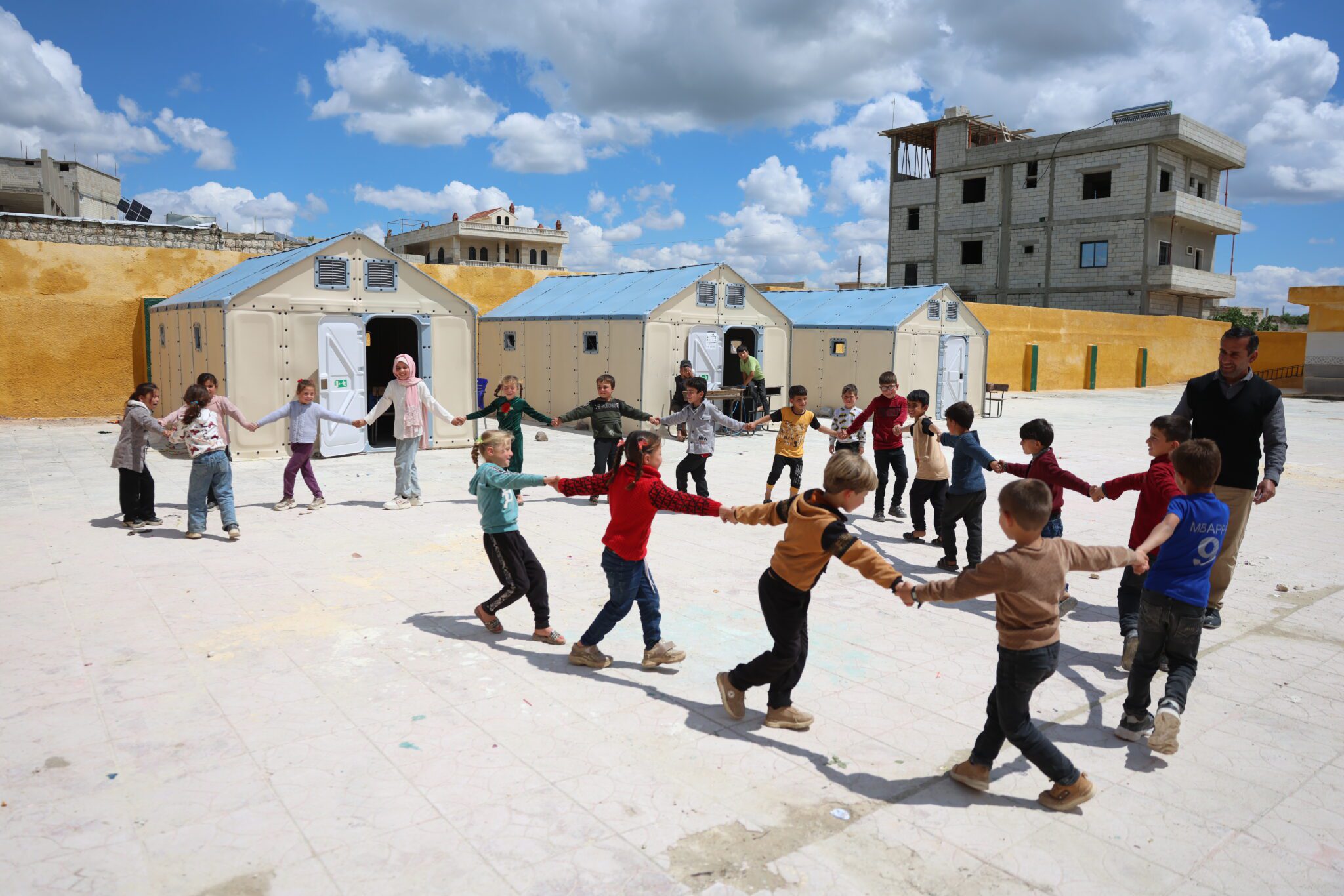
After years of displacement, families are returning home across Syria. But many are coming back to damaged neighbourhoods, and children are returning to places where schools are not yet ready to welcome them.
In Southern Idlib, some children have come back to classrooms with missing walls. Other schools are standing but do not have enough room for all the children returning.
For children who have already missed years of stability, having somewhere to continue learning is an important part of returning to everyday life.

Temporary classrooms supporting children returning to school in Syria
In early 2026, 48 shelters were installed as temporary classrooms at 14 schools in Maarat al-Numan and Kafr Nabel in Syria.
Together with Basmeh & Zeitooneh, and with grant support from Chalhoub Group, we provided the classrooms to create more learning space and supporting the education of around 1,450 students. The project was coordinated with the Directorate of Education in Idlib Governorate.
The classrooms do not replace permanent school buildings. They provide a temporary space where lessons can continue while schools are damaged, overcrowded or undergoing rehabilitation.
“It saved our education. Without it, we would not have had a classroom.”
Student, Western Hass
Read more
A school without doors or windows
At Magharat Mirza School, principal Khaled Enad Al-Issa remembers what teaching was like during winter before the temporary classrooms arrived.
“We were in a school without doors or windows. We suffered from the cold, and the situation was difficult in every way.”
Khaled Enad Al-Issa

Before, students and teachers had to learn and teach in difficult conditions. With no doors or windows, children sat in the cold during class.
The temporary classrooms provided a protected space where lessons could continue.
“Education is the foundation of society… We hope that the children will have a better future than what they have experienced in the past.”
Khaled Enad Al-Issa
Fatima wants to become a doctor
Fatima Al-Alaywi is 12 years old and in fifth grade. Her dream is to become a doctor.
When she first returned to school, she was surprised by what she found.
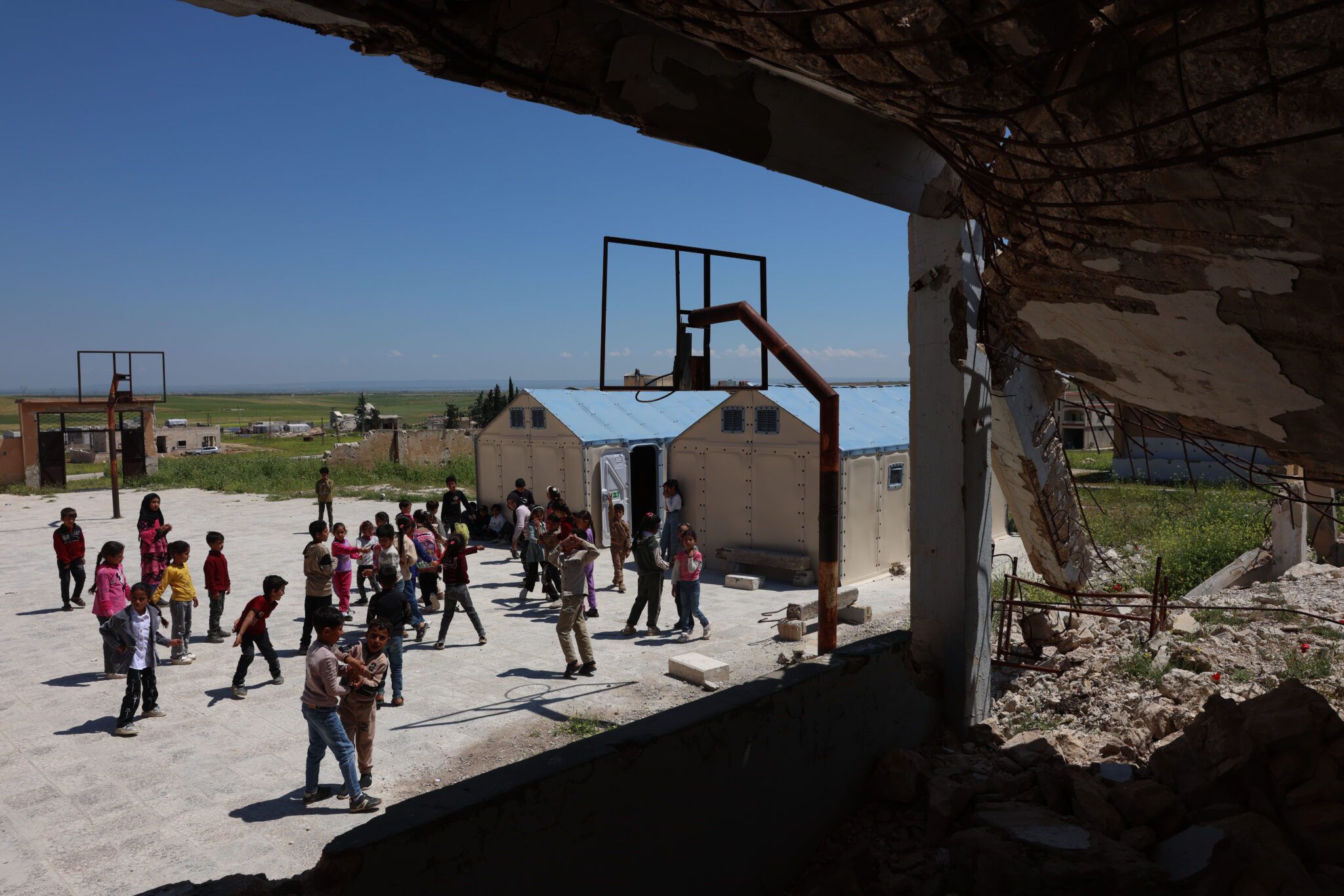
“It was destroyed. The walls were cracked, and cold weather came through them. There were not enough desks.”
Fatima
There was only one writing board, which classes had to share. At times, students sat on stones.
Then the temporary classrooms arrived.
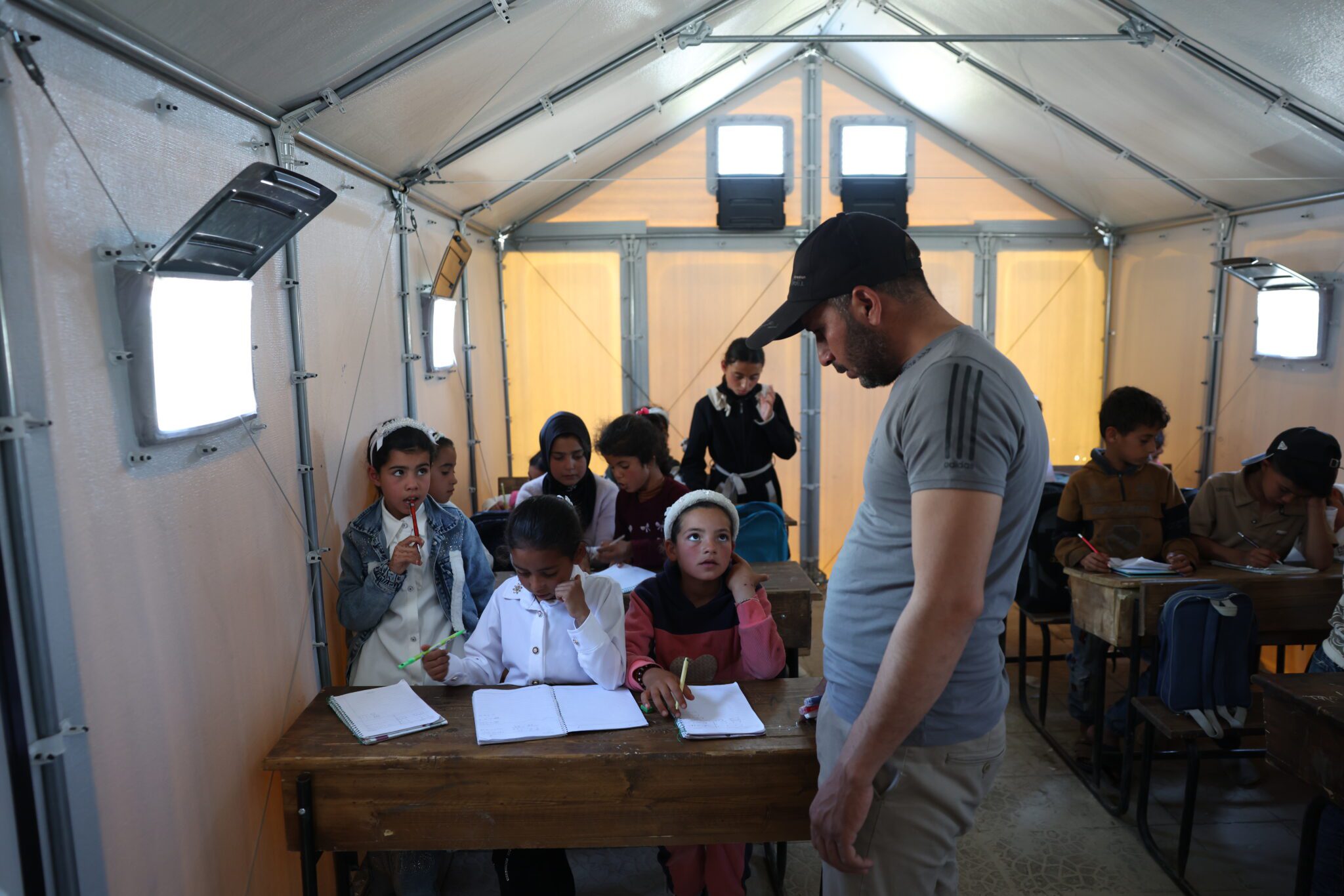
“When I entered the shelter for the first time, I felt happy. I was very pleased to see that there were plenty of desks and a board for each class.”
Fatima
What returning to a classroom means
When a school reopens, daily life starts to return
Children are happy about seeing their friends again, continuing their education and thinking about what they want to do in the future.
Parents have a nearby place for their children to learn, which gives them peace of mind and more time for work and rebuilding their homes.
Teachers come back to work, children walk to class, and the streets feel active again.
What we learned from students, teachers and families
The shelters are used as temporary classrooms, not a replacement for permanent schools. Students and teachers also helped us understand what still needs work, particularly heat, ventilation, lighting and classroom size. Their feedback will help us and our partners improve how shelters are used as classrooms in the future.
A classroom cannot rebuild a home or replace what a family has lost, but it gives children a place to learn, be with friends and return to a familiar routine.
What we learned from the evaluation
Rapid evaluative study of shelter contribution to learning outcomes in Idlib


